Compare
Cabaret dinner or Vltava cruise?
Two ways to spend a Prague evening with dinner: a decades revue on stage, or a buffet on a glass-roofed boat. How they differ and who each suits.
Reserve the cabaret ↗Quick answer
Choose the cabaret if you want a show to be the point of the night: two hours of dancers, singers and stunts through the twentieth century, with four courses served as you watch if you add dinner. Choose the glass-boat cruise if the city is the point: about three hours on the Vltava with a welcome drink, a buffet cooked on board, live music and the lit riverbanks. The cruise suits mixed ages and wheelchair users; the cabaret is for over-18s only.
The two evenings side by side
| Cabaret | Glass-boat cruise | |
|---|---|---|
| Length | About 2 hours | About 3 hours |
| Food | Optional four courses | Buffet cooked on board |
| Entertainment | Dance, song, stunts | Live music, river views |
| Wheelchairs | Not suitable | Accessible |
| Drinks | From the bar | Welcome drink, then the bar |
The short answer
Both are dinner evenings, but they are built around different things. The cabaret puts a production in front of you: costume changes, choreography, singers and stunt acts, era after era. The cruise puts Prague in front of you: the river, the bridges and the illuminated buildings on both banks, with music playing in the background. Ask yourself a simple question: would you rather watch performers or watch the city go by? If the answer is performers, book the revue. If it is the view, book the boat. If you have two free evenings, the pair work well together. What you want to look at for the evening usually decides it.
What the cabaret evening is
A revue of about two hours in central Prague. Dancers, singers and stunt performers move through the decades of the twentieth century, with video projections behind them, and the numbers run without a storyline. Seats come in three categories by distance from the stage. The dinner is optional: with it, a starter, soup, main and dessert are served during the show, with vegetarian and gluten-free menus. Without it, you order drinks from the bar. The show is for over-18s only, the dress code is smart casual, and wheelchair users are better served by another evening.
What the cruise evening is
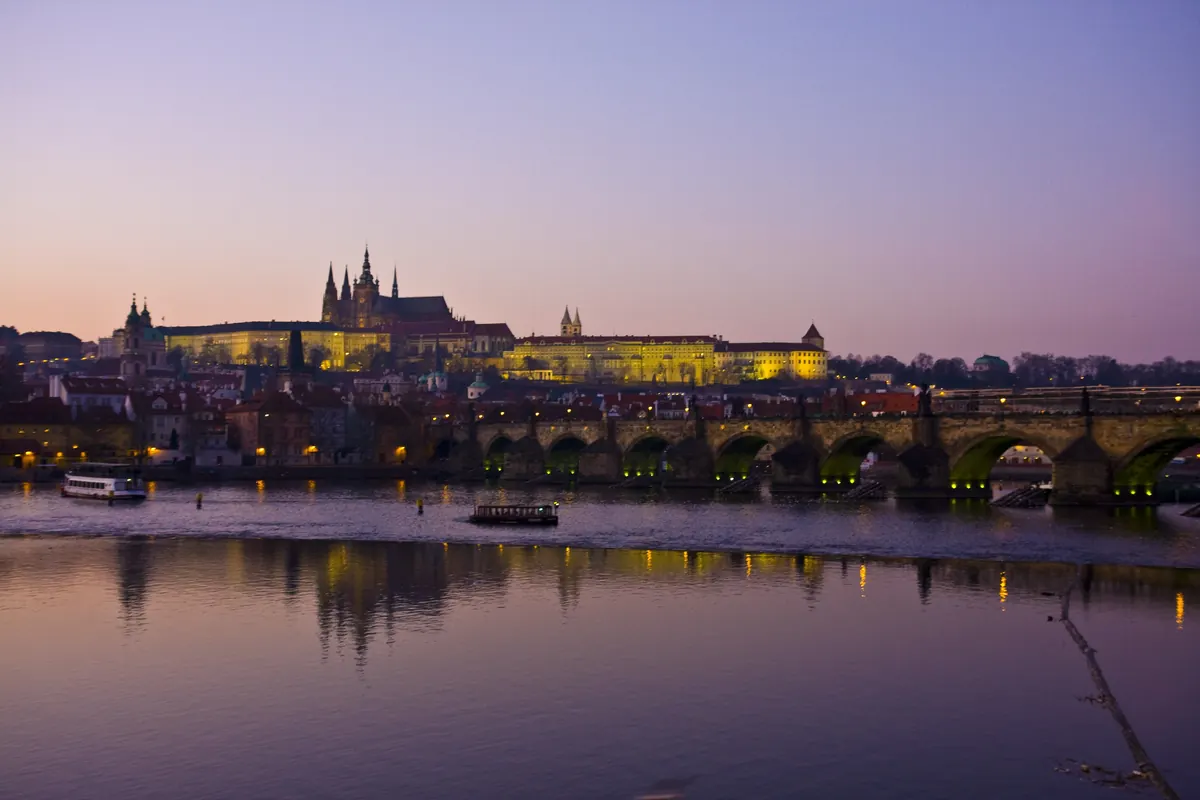
About three hours on a heated boat with glass walls and a section whose glass roof and sides can open. You board with a welcome drink, eat from a buffet of Czech and international dishes prepared on board, and listen to live music while the boat runs past the Charles Bridge, the Rudolfinum, the Dancing House and the lit castle above the river. An open deck gives clear views for photographs, and an audio commentary is available in several languages, with a map to follow the route. There are two meeting points, depending on the option you book.
Food, compared
The two meals work differently. On the boat it is a buffet, so you choose what and how much, and vegetarian and vegan dishes are part of the spread. At the cabaret, the dinner option is a plated four-course menu served while the show runs, with vegetarian and gluten-free versions. Extra drinks are bought on both evenings: at the bar during the revue, and on board during the cruise, where only the welcome drink comes with the ticket. If eating well is the priority, the buffet gives more choice; for a plated dinner at your own table, the cabaret wins. Either way, raise dietary needs at booking, giving the kitchen time to prepare.
The stage against the view
This is the real difference. At the cabaret you face one stage for two hours, and the whole evening is designed around what happens on it. On the river, the scenery moves. The Vltava is the longest river in the Czech Republic and runs straight through the historic centre, so a cruise shows you the city from an angle you cannot get on foot. Travellers who have already walked the Old Town often find the boat a satisfying way to see it all lit at once. First-time visitors who want an evening of entertainment usually prefer the revue. Photographers lean the other way: the open deck gives them a moving platform for the bridges, while a theatre asks you to keep your phone down.
Ages and access
If anyone in your group is under 18, the decision is made for you: the cabaret admits adults only, so the cruise is the evening you can share. The boat is also wheelchair accessible, while the revue is not suitable for wheelchair users. The boat turns away pets, luggage and large bags, so plan to drop suitcases first if you are cruising on a travel day. For older travellers or anyone who dislikes loud music, the boat is the gentler night; the revue is deliberately big and bright.
Weather and season
A cabaret runs indoors whatever the weather, which makes it a reliable choice for a cold or wet night. The boat is heated and enclosed in glass, so it works in winter too, and on mild evenings the retractable section and the open deck let the air in. Upgrading to a window seat guarantees a place in that glass section. Prague's winter evenings are dark early, which helps the cruise: the illuminated riverbanks are on show for the whole trip. In summer the light lingers, so the first part of a cruise may pass in daylight before the bridges and buildings light up.
Who each one suits
Neither is the better night in general; they answer different wishes. A couple marking an anniversary might want the sparkle of the stage, while the same couple travelling with parents might prefer a table by the water where everyone can talk. Think about who is coming before you think about the menu. Groups that cannot agree often settle it by age, since the revue admits adults only, or by appetite, since a buffet suits big eaters.
- Cabaret: couples, friends' groups, birthdays, anyone who loves musicals or variety.
- Cruise: families, mixed-age groups, first views of the city, wheelchair users.
- Cabaret: a night where the entertainment is the point.
- Cruise: a slower evening built around food and scenery.
Who this isn't for
Skip the cabaret if you dislike loud volume, are travelling with under-18s or use a wheelchair. Skip the cruise if you get restless sitting for three hours, if a buffet feels too casual for a special night, if you are prone to feeling queasy on boats, or if you have already seen the riverfront lit up from the bridges and want something new. And if what you really want is classical music or a play, neither of these is the right evening.
Doing both
On a stay of three nights or more, you can easily have both. Many visitors use the cruise early in the trip, as an overview of the city, and keep the revue for a later evening once they know their way around the centre. The two never clash on logistics: one starts by the river, the other at a door in central Prague. Neither costs anything to cancel until the final 24 hours, and neither has to be paid for upfront, so holding both while you plan costs nothing if your days shift.
Read next: Prague cabaret show: worth it?
How to book either
Pick the date in the calendar on this site and choose your options: the seat category and dinner for the revue, or the meeting point and window seat for the cruise. The calendar shows live prices in your currency. The revue is often marked as likely to sell out, so do not leave it until the day. For the cruise, check which meeting point your option uses and plan the walk there before you set off. For the revue, read the entrance details on your ticket before the evening, and message the organiser through the app if anything is unclear.
Frequently asked questions
Which is better for a couple?
The cabaret, if you want entertainment and a festive mood; the cruise, if you want conversation over dinner with views of the lit city.
Which is better with children?
The cruise. The cabaret admits guests over 18 only.
Which is longer?
The cruise, at about three hours. The cabaret runs for about two.
Are drinks included?
On the cruise, a welcome drink is; further drinks are bought on board. At the cabaret, drinks are ordered from the bar.
Which works in winter?
Both. The revue is indoors, and the boat is heated and enclosed in glass, with a section that opens on mild nights.
Sources